
Brand and interface
A compact identity and practical interface that stay clear across planning tools and long lists, including product comparisons.
I built Kit Authority around one useful object: the complete setup for a trip. Its kit planner shows what belongs together before the reader compares individual products.
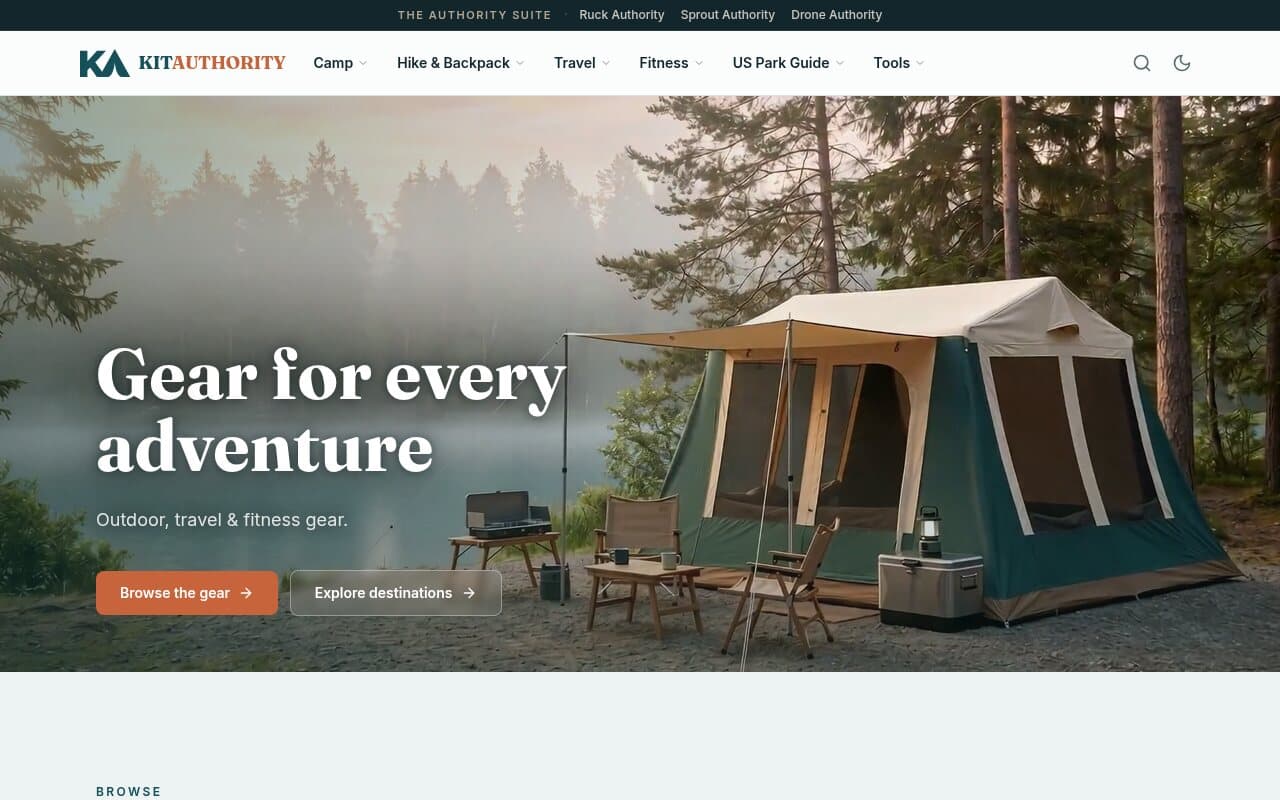
Retail menus split one trip across five or six departments. The shopper has to work out what belongs together. Kit Authority starts with the complete setup, marks what is optional, and explains the choices inside it.
The planner, activity pages, and comparisons all use the same complete-kit structure.
A compact identity and practical interface that stay clear across planning tools and long lists, including product comparisons.
Each activity page connects a complete packing list to the guides and product data needed for that specific trip.
Comparisons appear where the choice comes up, so readers can see the recommendation and the job it needs to do.
Google Search Console records search visibility and visits. Bing AI Performance records when Microsoft AI answers cited the site as a source.
Web search, Jun 8, 2026 to Sep 29, 2026
The range starts when data first became available.
Bing AI Performance, Apr 2 to Oct 2, 2026
A citation is a linked source, not a visit or lead.
Kit Authority follows the trip a reader is planning instead of a store department. A service website should follow the customer’s task, then introduce options and proof when they become useful.