When someone in Wauwatosa searches for a service, Google shows a map with three businesses before any website. Google’s AI answers do the same: they name businesses from their Google Business Profiles, then cite the business’s own site. So the first impression is the profile, and the website is where the customer goes to decide.
That changes what the site is for. It does not need to shout. It needs to confirm what the profile promised, answer the questions a customer has before calling, show real work and real reviews, and make the next step obvious on a phone.
What I set up in every build
The name, address format, phone number, and hours on the site match the Google profile exactly, because mismatches cost rankings. Each service gets its own page with the questions customers ask, marked up so Google and AI assistants can read them. The site links to your review page and the profile links back to the site. Analytics and Search Console are connected before launch, so we can see what people searched for and which page they landed on.
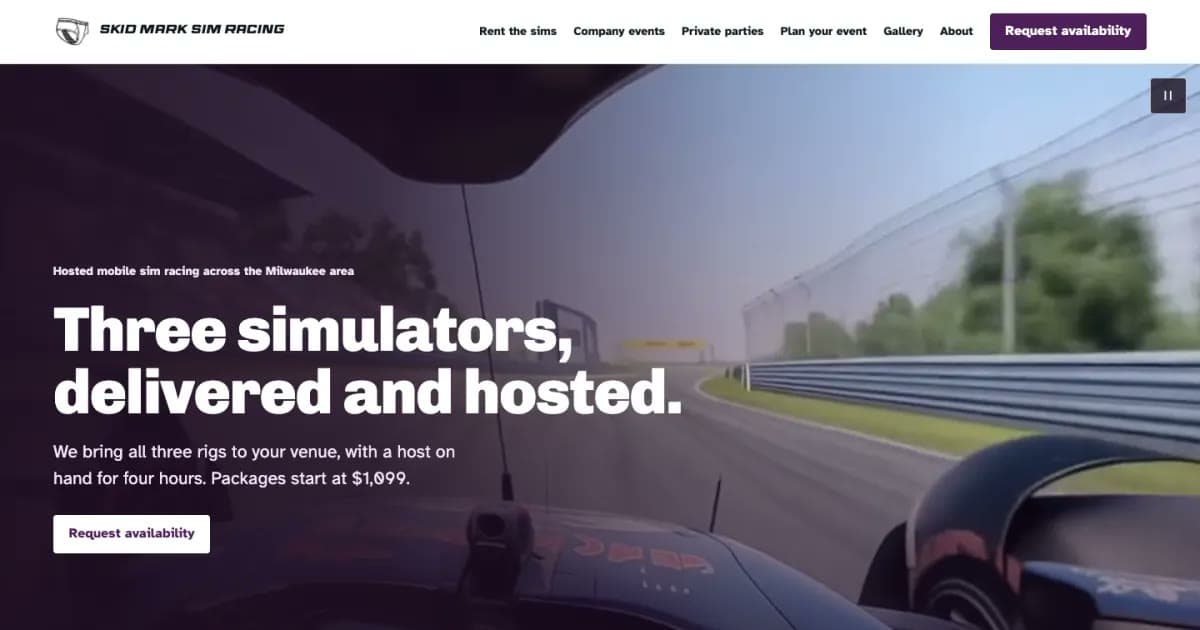
You can see this on the Skid Mark Sim Racing case study: a page for each kind of event, the logistics answered before the first call, and one form that asks for the date and venue.